In this Ipsos-led exploration, we delve into Generation Z's nuanced identity, financial outlook, political engagement, and societal values. Our research reveals that while Generation Z in the UK demonstrates a fluid identity, they hold strong cohort affiliations.
They exhibit greater financial optimism and contribute to reduced income inequalities compared to the early 2000s. Politically engaged, they align with the left-of-center Labour Party, showcasing their involvement in the current political landscape.
Furthermore, Generation Z emerges as the most progressive generation, embracing liberal values across social and political realms. While often perceived as environmentally conscious, the data paints a more complex picture.
Additionally, we explore where Generation Z shares similarities and differences with other generations, acknowledging the influence of age on certain aspects.
With Ipsos iSay, you can contribute to impactful research like this and shape future trends with your insights and opinions. Plus, enjoy earning rewards as you make your voice heard. Haven't joined yet? Sign up today and be part of the conversation!
The data sources used in this article can be found here.
Key Findings
- Generation Z in the UK is characterized by a fluid identity, with Ipsos research concluding they have the weakest cohort identity among the four main generations, yet those who identify as Gen Z tend to do so strongly.
- Ipsos findings reveal that Generation Z shows greater financial optimism than the Millennial generation, with signs of weaker generational income inequalities compared to the early 2000s.
- Politically, Generation Z is more interested than Millennials were at a similar age, aligning predominantly with the UK’s left-of-centre Labour party, as per Ipsos' comparative analysis.
- Generation Z is identified as the most progressive generation, holding more liberal values and socially and politically progressive attitudes than Millennials, especially in areas like prison sentencing and censorship.
- Contrary to common perceptions, Ipsos data indicates that Generation Z, while often considered the greenest generation, does not show a significantly stronger environmental consciousness compared to previous generations.

What is Generation Z?
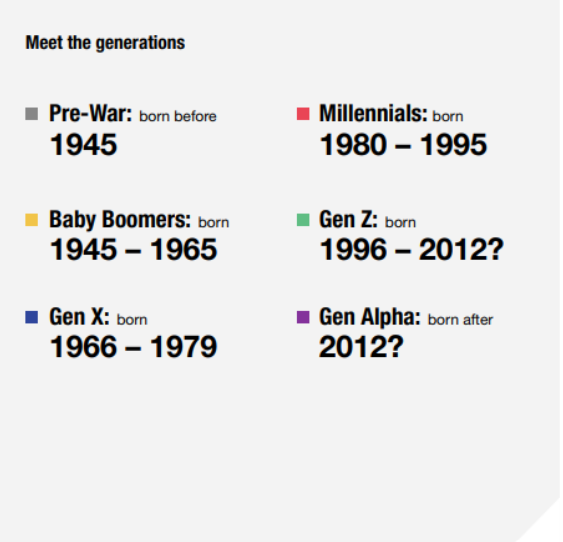
Generation Z, often abbreviated as Gen Z, refers to the cohort of individuals born roughly between 1996 and 2012, making them the new generation following the Millennials.
This generation, which includes the oldest Gen Zers now in their mid-twenties, is characterized by its unique relationship with technology, having grown up in the digital age with easy access to the internet and smartphones. Known as the most diverse generation, their experiences from a young age in a highly connected world set them apart.
Gen Z, comprising young adults and young people still in their formative years, is known for its digital fluency, comfort with social media, and a preference for online communication. They are often described as socially conscious, politically engaged, and progressive in their views, reflecting the diverse generation they represent.
The rapid technological advancements and socio-cultural changes of the 21st century likely shape this generation's values, behaviors, and perspectives.
Defining Characteristics of Generation Z
Generation Z, encompassing those born between 1996 and 2012, possesses a dynamic blend of attributes that distinguish them in the contemporary landscape. In the UK, Gen Z is characterized by an identity that is remarkably fluid, setting them apart from older generations.
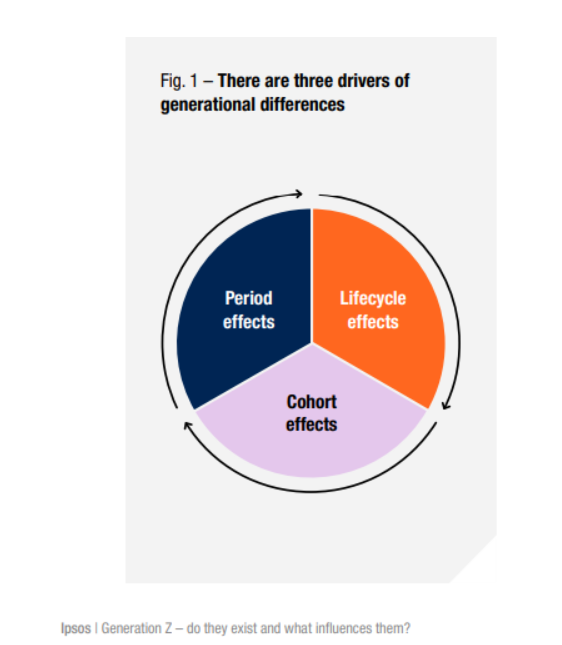
Our research concludes that they have the weakest cohort identity of the four main generations, with many also identifying as Millennials. However, those who do identify tend to do so strongly. This characteristic lends a unique flavor to their generational experience, challenging traditional notions of generational identity.
Digital Natives in a Connected World
One of the prominent hallmarks of Generation Z is their innate status as digital natives. Raised in a connected world characterized by the proliferation of the internet and smartphones, Gen Z's digital fluency is second nature.
These tech-savvy individuals have seamlessly integrated technology into their daily lives, influencing how they communicate, consume information, and interact with the world. Ipsos findings emphasize that this generation's digital footprint is distinct, shaping their preferences, behaviors, and expectations.
Educational and Career Aspirations
Generation Z exhibits distinctive educational and career aspirations in the contemporary landscape. Ipsos research suggests that they harbor a set of ambitions shaped by the evolving socio-economic landscape.
With access to an abundance of information, Gen Z is driven by a desire for meaningful education and career opportunities. Their aspirations are marked by adaptability, a penchant for entrepreneurship, and a keen sense of purpose, reflecting their readiness to navigate a rapidly changing job market.
Social and Environmental Consciousness
Social and environmental consciousness are integral facets of Generation Z's identity.
While they are often dubbed the "greenest" generation, Ipsos data shows a more nuanced perspective, indicating that their actions at the same age may not be drastically different from the previous generation.
While Generation Z is commonly considered the greenest generation, so far the data does not support this hypothesis.
Nonetheless, Gen Z's heightened social awareness, progressive values, and active engagement in causes like climate change and social justice demonstrate their dedication to addressing critical global challenges.
Their values align with broader liberal and progressive stances, influencing their perspectives on issues such as prison sentencing, censorship, and the importance of traditional values.
Importantly, Ipsos highlights that while Generation Z has its distinct characteristics, there are instances where their experiences align with other generations, emphasizing the influence of age on certain aspects of their identity.
With Ipsos iSay, you can contribute to impactful research like this and shape future trends with your insights and opinions. Plus, enjoy earning rewards as you make your voice heard. Haven't joined yet? Sign up today and be part of the conversation!
Generation Z in the Workplace
The entry of Generation Z into the workforce has ushered in a new era of employment dynamics. With Gen Z, organizations are experiencing a fresh set of expectations, values, and work preferences that distinguish them from their predecessors, including the Baby Boomers and the Millennial generation.
This generation, born between 1996 and 2012, exhibits a unique blend of characteristics that shape their approach to work, fostering an environment where adaptability and innovation take center stage.
New Workforce Dynamics
Incorporating Generation Z into the workforce has introduced novel dynamics. Ipsos' research reveals a multifaceted picture of this cohort.
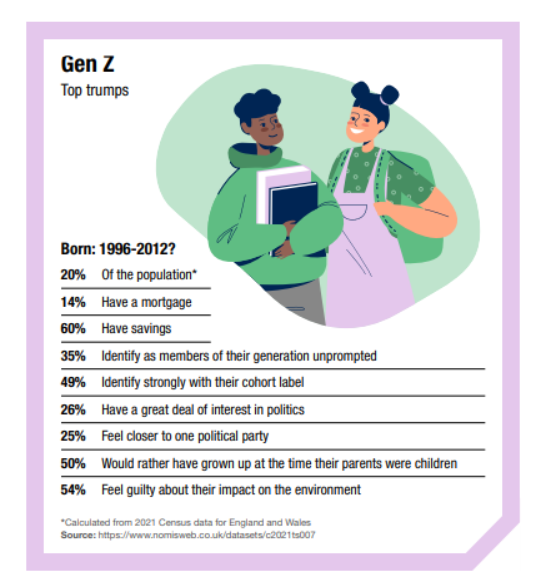
They are a generation that values financial stability and fiscal responsibility, with 14% already having a mortgage and 60% having savings. This financial pragmatism influences their decisions and choices in the professional realm.
Furthermore, over one-third of Gen Z displays a remarkable ability to self-identify, with 35% recognizing themselves as members of their generation without prompting. Furthermore, 49% strongly identify with their cohort label, underscoring a sense of generational pride and unity.
Additionally, their deep interest in politics, shared by 26% of Gen Z, introduces a layer of political awareness that shapes their workplace engagement.
Gen Z's Expectations and Values in Employment
Understanding Generation Z's expectations and values in employment is paramount for organizations seeking to engage and retain this generation. Ipsos findings indicate that Gen Z brings a unique blend of ambition and practicality to their careers.
A remarkable 50% express a desire to have grown up during their parents' era, reflecting a longing for a time they perceive as simpler. Simultaneously, their strong concern for environmental impact, with 54% expressing guilt about their ecological footprint, introduces a sustainability-conscious dimension to their work values.
Technological Trends Among Generations
The landscape of technology and its impact on generations is an ever-evolving phenomenon. In recent years, the introduction of Generation Z into the digital landscape has brought forth a new era of technological trends and behaviors.
Understanding the role of technology in the lives of different generations, and especially in Generation Z, provides insights into their digital footprint and how they engage with the modern world.
Generation Z's Digital Footprint
Generation Z's relationship with technology is characterized by seamless integration and a profound reliance on digital tools. Growing up in an era of smartphones, social media, and constant connectivity, Gen Z is renowned for their innate digital fluency.
Their digital footprint extends across various facets of life, from social interactions and education to work and entertainment. This generation's online presence is marked by active engagement with social media platforms, online content creation, and the consumption of information via digital channels.
Comparative Analysis of Gen Z, Millennials, and Gen X
To gain a comprehensive understanding of technological trends, it's crucial to compare Generation Z with their generational predecessors, the Millennials and Generation X. While each generation has witnessed the evolution of technology, they exhibit distinct patterns in terms of technology adoption, preferences, and attitudes.
Exploring these comparative analyses sheds light on the evolving digital landscape. It highlights how Generation Z's digital behavior sets them apart while also showcasing areas of overlap and commonality.
Economic Behaviors Across Generations
The economic behaviors and attitudes of different generations have always been a subject of interest for economists, marketers, and sociologists. Each generation, shaped by its unique experiences and societal changes, develops distinct financial habits and perspectives. This is particularly evident when comparing the emerging Generation Z with their predecessors.
Financial Attitudes of Generation Z
Generation Z, born between 1996 and 2012, is entering adulthood in a rapidly changing economic landscape. Unlike Millennials, who faced the brunt of the economic recession, Generation Z has grown up in a relatively stable economic environment. This has influenced their financial attitudes significantly.
Notably, Generation Z shows signs of greater financial optimism than Millennials.
This optimism is reflected in their spending habits, career choices, and long-term financial planning. This generation's approach to money also reflects a shift in societal values. With the rise of digital technology and a more interconnected world, Generation Z values experiences and personal growth, often prioritizing these over material possessions.
This mindset likely impacts their spending habits, with a tendency to invest in education, travel, and personal development.
Ipsos Findings on Spending and Saving Patterns: Gen Z vs. Older Generations
Recent studies by Ipsos have shed light on the spending and saving patterns of Generation Z compared to older generations. One key finding is the fluidity of Generation Z's identity.
Social and Political Views: A Generational Perspective
In the evolving landscape of social and political views, generational perspectives offer a fascinating insight into how attitudes and beliefs are shaped over time. Each generation, influenced by its unique historical context, develops distinct viewpoints that contribute to the broader societal narrative.
Generation Z's Progressive Outlook
Generation Z, those born between 1996 and 2012, stands out for its progressive outlook on social and political issues. This generation has been raised in a time of rapid technological advancement and global connectivity, which has significantly influenced their perspectives. A key aspect of their political engagement is that this heightened interest in politics is not just a reflection of their age but also the times they are growing up in, which are marked by significant social and political changes. The progressive nature of Generation Z is also evident in their liberal values. They tend to hold more socially and politically progressive attitudes than Millennials at a similar age.
This includes a more liberal stance on issues such as prison sentencing, censorship, and the importance of traditional values. Generation Z's progressive outlook is shaping how they interact with the world and is likely to influence future societal trends.
Ipsos Insights on Political and Social Attitudes Across Generations
Ipsos, a global market research and consulting firm, has provided valuable insights into the political and social attitudes across generations. Their research highlights the nuances in how different age groups perceive and engage with political and social issues. One of the notable findings is the political alignment of Generation Z and Millennials in the UK.
Politically, Gen Z and Millennials are similarly aligned to the UK’s left-of-center Labour party.
This alignment suggests a broader trend of younger generations leaning towards more progressive political parties, reflecting their values and priorities.
It's important to recognize that while Generation Z is distinct in many ways, there are areas where their views do not significantly differ from other generations. Understanding these similarities and differences is crucial for a comprehensive view of the generational perspectives on social and political issues.
Ipsos Comparative Analysis: Generation Z and Other Generations
The Ipsos Comparative Analysis offers a deep dive into the distinct characteristics and trends of Generation Z in comparison to previous generations. This analysis is crucial in understanding the evolving dynamics of societal and cultural shifts.
Key Differences and Similarities Highlighted by Ipsos
Ipsos' research reveals intriguing insights into Generation Z, particularly in the UK context. A standout finding is the fluidity of Generation Z's identity.
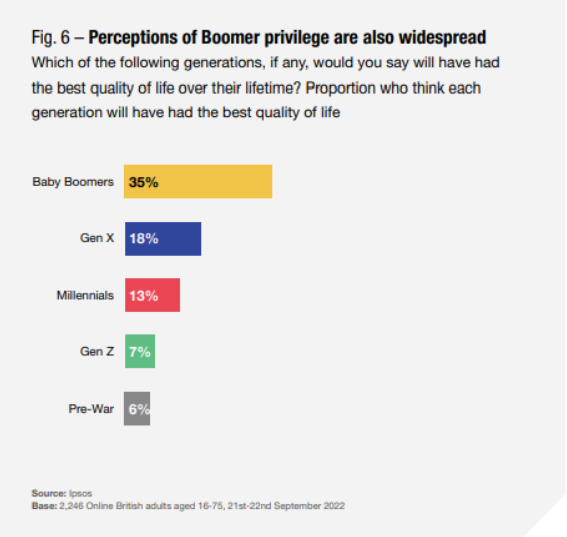
51% of Baby Boomers feel they will have had the best quality of life, and 39% of Gen X and 25% of Millennials agree. Just 16% of Gen Z agree, however, this cohort still thinks older groups will have it better: 23% say Gen X will have had the best quality of life and 19% say the same about Millennials – compared with 16% who feel this will be experienced by their generation.
We also see more significant bleed across cohorts for Gen Z: almost one in five consider themselves Millennials, compared with just eight percent of Millennials who think they are Gen Z. This data suggests one obvious conclusion: that cohort identities settle over time.
Generation Z show signs of greater financial optimism than Millennials. There are also signs that generational income inequalities are lower than they were in the 2000s. This optimism could be a driving force behind their consumer behavior and career choices.
In terms of political engagement, Gen Z is more politically interested than Millennials were at a similar age – however, this is a by-product of living in a more politicized time. Interestingly, both Gen Z and Millennials in the UK show a similar political alignment, gravitating towards the left-of-center Labour Party.
Generation Z's progressive nature is also noteworthy. Generation Z is the most progressive with significantly more liberal values. They exhibit more liberal attitudes in areas such as prison sentencing, censorship, and traditional values, indicating a shift in societal norms and expectations.
Despite common perceptions, while Generation Z is commonly considered the greenest generation, so far the data does not support this hypothesis. This challenges the narrative of Generation Z as inherently more environmentally conscious than previous generations.
Generational Impact on Society and Culture
The impact of Generation Z on society and culture is multifaceted. Their fluid identity and progressive values are reshaping cultural norms and societal expectations. The blend of optimism and liberal values in Generation Z is likely to influence various sectors, from politics and economics to social activism and cultural production.
Their unique blend of political interest and progressive values could lead to significant changes in political landscapes and policy-making. Moreover, their approach to financial optimism, despite the backdrop of weaker generational income inequalities, might redefine consumer behavior and economic strategies in the coming years.
Future Trends and Predictions
Looking ahead, the trends and characteristics of Generation Z suggest several future implications. Their strong identification with progressive values and political interests indicates a continued shift towards more liberal policies and societal norms.
The financial optimism of Generation Z, coupled with their unique approach to identity and values, could lead to innovative changes in the marketplace, with businesses and marketers needing to adapt to their evolving preferences and worldviews.
The environmental consciousness of Generation Z, although not as pronounced as previously thought, still holds potential for future green initiatives and sustainable practices, especially as this generation gains more influence in societal decision-making.
With Ipsos iSay, you can contribute to impactful research like this and shape future trends with your insights and opinions. Plus, enjoy earning rewards as you make your voice heard. Haven't joined yet? Sign up today and be part of the conversation!
Global Influence and Cultural Shifts
In the ever-evolving global landscape, each generation plays a pivotal role in shaping cultural and societal norms. Generation Z, born between 1996 and 2012, is currently at the forefront of this transformative era, marking its influence in various domains compared to previous generations.
Generation Z's Global Impact Compared to Previous Generations
Generation Z's global impact is distinct, primarily due to their upbringing in a digital, interconnected world.
This generation has been instrumental in driving social and political change, often leveraging technology to amplify their voices. Unlike previous generations, Generation Z has grown up in a time marked by rapid technological advancements and global connectivity, which has significantly influenced their perspectives and actions.
This heightened interest has led to a more active participation in global issues, from climate change to social justice, indicating a shift in how younger generations engage with the world around them. However, it's crucial to acknowledge the areas where Generation Z mirrors their predecessors.
As important is the need to say where Generation Z are not different. There are cases where we see no difference, or the difference is entirely due to the cohort’s age rather than their specific circumstances.
This observation suggests that while Generation Z has its unique traits, certain characteristics and behaviors are consistent across generations, influenced more by age and life stages than generational identity.
Cultural Contributions and Changes
Generation Z has made significant cultural contributions, particularly in the realms of technology, art, and social norms. Their approach to creativity and expression often challenges traditional boundaries, reflecting their progressive values. Generation Z is the most progressive with significantly more liberal values.
This progressiveness is evident in their cultural outputs, from music and fashion to digital content creation, where they often advocate for inclusivity, diversity, and social justice.
In terms of environmental consciousness, while Generation Z is often perceived as the greenest generation, so far the data does not support this hypothesis. This challenges the narrative around their environmental activism, suggesting that while they are aware and concerned, their actions might not be as distinct from other generations as previously thought.
FAQs
What is Gen Z age?
Generation Z refers to individuals born from 1996 to around 2012. As of now, members of Gen Z range in age from approximately 10 to 26 years old, representing a significant portion of the global population.
Who is before Gen Z?
The generation preceding Generation Z is known as the Millennials or Generation Y. Millennials are typically identified as individuals born from the early 1980s to the mid-1990s, making them the immediate predecessors to Gen Z.
Why is Gen Z called Gen Z?
Generation Z is called "Gen Z" as it follows Generation Y, more commonly known as the Millennials. The use of "Z" continues the sequential naming convention started with Generation X, followed by Generation Y, indicating that they are the successive generation.
What is Gen Z slang?
Gen Z slang is a collection of phrases and words that have gained popularity among this generation, often through social media and internet culture. Examples include terms like "lit" (exciting or excellent), "salty" (bitter or upset), and "ghosting" (suddenly cutting off communication without explanation).
What is special about Gen Zers?
Generation Z is special for its digital nativity, having grown up with the internet and social media, which significantly influences their communication, learning, and social interactions.
They are known for their progressive values, financial optimism, and strong political interests, often being more liberal in their views compared to previous generations. Additionally, Gen Z shows a fluid identity, with many members also identifying with Millennial characteristics.
Wrapping Up
In this comprehensive exploration, we've delved into the multifaceted nature of Generation Z, comparing and contrasting them with previous generations. Generation Z, emerging between 1996 and 2012, stands out for its digital fluency, progressive values, and unique approach to identity and societal engagement.
While they exhibit greater financial optimism and a strong political interest, often aligning with the UK's left-of-center Labour Party, they also share commonalities with older generations, particularly in areas where age rather than generational identity plays a key role.
Despite perceptions of being the greenest generation, the data presents a more nuanced view of their environmental consciousness. As Generation Z continues to carve out its place in the world, its blend of innovation, adaptability, and progressive outlook is set to leave a lasting impact on the global cultural and societal landscape.