Welcome to the article about US sports betting, a comprehensive exploration of the evolving landscape of sports betting in the United States.
The data we covered in this article comes from the following Ipsos sources:
https://www.ipsos.com/en-us/sports-0
https://www.ipsos.com/en-us/sports-betting-everywhere-how-do-americans-feel-about-it
https://www.ipsos.com/en-us/sports-gambling-growth-driven-small-group-highly-engaged-sports-fans
https://www.ipsos.com/en-us/betting-sports-betting-growth
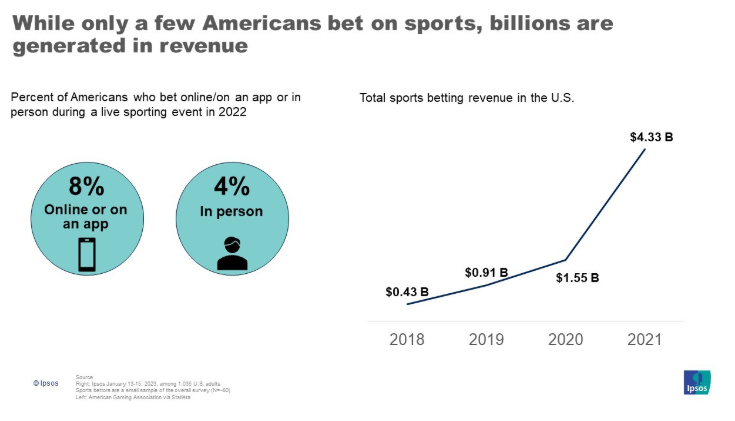
The latest research by Ipsos reveals intriguing insights: only 8% of Americans have engaged in online or app-based sports betting in the past year, with a slightly lower percentage betting in person.
Interestingly, while a third of Americans see sports betting as a tool for increased sports engagement, this sentiment is significantly stronger among active sports bettors.
The report delves into the demographics of bettors, the economic impact of sports betting, and the public's divided stance on its legalization, providing a nuanced understanding of this dynamic sector.
Key Findings
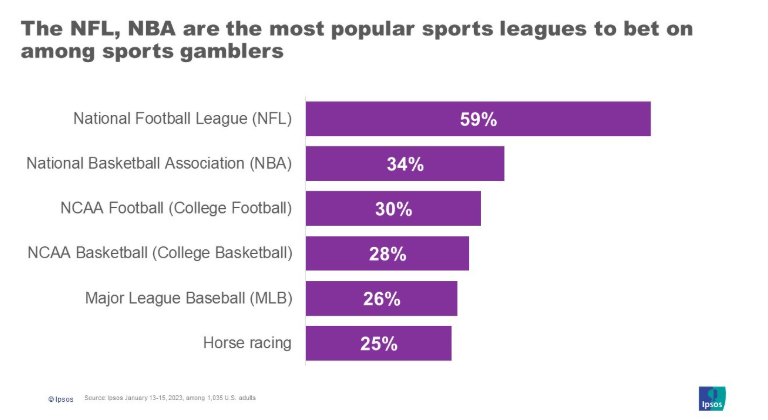
- The most popular league to bet on among sports bettors is the NFL (59%), highlighting the NFL's significant influence in the sports betting market in the USA.
- Just 8% of Americans have placed an official bet on a live sporting event online, and even fewer have bet on a live event in person (4%) or on an esports event in either fashion (3%), indicating a relatively modest but growing engagement in sports betting.
- Sports betting generated over one billion dollars in 2020, and the next year, that nearly quadrupled to $4.33 billion in revenue, demonstrating the substantial financial contribution of sports betting to the economy.
- Most sports bettors are identified as male, white, wealthy, and younger, suggesting a specific demographic trend in the sports betting market.
- The article reveals a divided public opinion where Americans are divided about legalizing in-person, online, or app-based sports betting, but with a tendency towards supporting personal freedom in betting.
With Ipsos iSay, you can contribute to impactful research like this and shape future trends with your insights and opinions. Plus, enjoy earning rewards as you make your voice heard. Haven't joined yet? Sign up today and be part of the conversation!

Ipsos Insights: Latest Stats and Facts on US Sports Betting
In a revealing study by Ipsos, it was found that 8% of Americans report betting on sports online or on an app in the past year, while 4% have done so in person. This statistic not only highlights the growing trend of digital sports betting but also underscores the enduring appeal of in-person betting experiences.
Interestingly, the study also reveals that the NFL reigns supreme as the most betted-on league, reflecting its deep-rooted popularity in American sports culture.
Demographics of Sports Bettors
Diving into the demographics of those who bet on sports, Ipsos's research presents a specific profile: Most sports bettors are male, white, wealthy, and younger. This demographic data sheds light on the predominant group participating in sports betting, suggesting a skew towards a younger, affluent male audience.
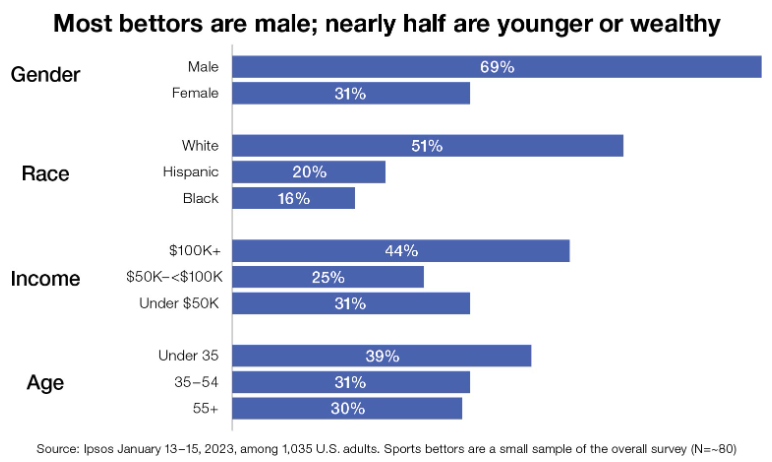
This insight could have significant implications for marketing strategies and the development of betting platforms tailored to this key demographic.
Engagement Levels Among Bettors
Regarding the engagement levels of sports bettors, the Ipsos study reveals a fascinating dichotomy.
While the general American public seems somewhat divided on the role of sports betting, with only one in three Americans feeling that sports betting is a way to get people more engaged with sports, the sentiment among active sports bettors is markedly different.
A substantial 69% of sports bettors feel that sports betting is a way to get people more engaged with sports.
This stark contrast indicates that those who are actively involved in sports betting see it as a significant enhancer of their sports experience, potentially driving deeper interest and involvement in sports events.
Reasons for Not Betting
Exploring why a large segment of Americans abstain from sports betting, the study uncovers that the predominant reason is financial prudence.
Among the vast majority of Americans who do not bet on sports, the most cited reason is that it is a waste of money (52%), followed by not knowing enough about sports to bet on them (31%).
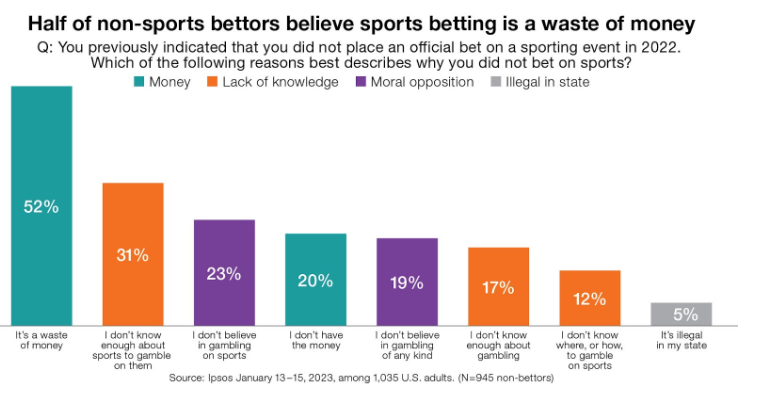
This insight into the mindset of non-bettors highlights the challenges and opportunities for the sports betting industry in terms of communication educational initiatives and responsible gambling practices.
With Ipsos iSay, you can contribute to impactful research like this and shape future trends with your insights and opinions. Plus, enjoy earning rewards as you make your voice heard. Haven't joined yet? Sign up today and be part of the conversation!
Current State of Legalized Sports Betting Across the US
Today, the US sports betting landscape, featuring both retail sports betting and online sportsbooks, is characterized by a patchwork of state laws. Each state crafts its own sports betting laws, leading to a diverse and dynamic market.
This variation in legal sports betting and legalized online sports betting across states has created a landscape where the legal status of sports betting varies significantly from one state to another.
State-by-State Legalization
The state-by-state approach to legalization has resulted in a diverse landscape where some states have fully embraced sports betting with both in-person and online options. In contrast, others remain in the process of considering or implementing legislation.
This varied approach reflects the unique political, cultural, and economic contexts of each state, contributing to a sports betting market that is as diverse as the country itself.
Public Opinion on Legalization
Public opinion on sports betting legalization, including legal online sports betting, is as varied as the laws themselves. Americans are divided about legalizing in-person or online or app-based sports betting.
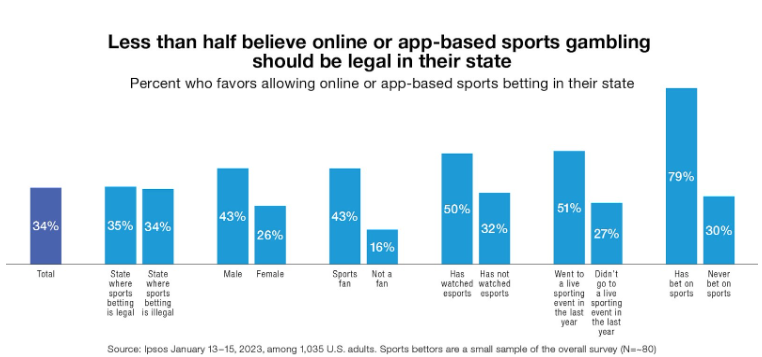
However, when considering regulated sports betting, most Americans agree that people should be allowed to bet and spend their money how they choose, rather than restricting it due to concerns over addictive behavior.
This division in opinion is further nuanced by the fact that one in three Americans feel that sports betting is a way to get people more engaged with sports, but 69% of sports bettors feel the same.
These statistics highlight the complex attitudes Americans hold towards sports betting, balancing concerns about addiction and morality with a desire for personal freedom and increased sports engagement.
The Surge of Online Sports Betting Platforms
The digital revolution has significantly impacted the sports betting industry, leading to the rapid growth of online sports betting platforms, including a surge in the popularity of sports betting sites.
This growth of online sports betting sites is a direct result of technological advancements and changing consumer behaviors, with more bettors preferring the convenience and accessibility of betting online.
The trend toward online betting is reshaping the industry, offering new opportunities and challenges for operators and regulators alike.
Growth Trends in Online Betting
The online sports betting sector has witnessed remarkable growth in recent years. Only about 8% of Americans say they've bet on sports via an app or online, and only 4% have bet on sports in-person in the past year.
Despite these seemingly modest numbers, the impact is significant. In 2022, less than one in ten Americans placed a bet on live sports games. Despite that, this small, engaged group of Americans generated over $4 billion in revenue.
This data underscores the substantial financial impact of online sports betting, even with a relatively small percentage of the population participating.
Impact of Technology on Betting
Technology has been a game-changer in the sports betting industry. The advent of mobile apps and advanced online platforms has made sports betting more accessible than ever before.
Innovations in digital technology have not only streamlined the betting process but also enhanced the user experience with features like live betting, AI-driven insights, and personalized betting options. This technological evolution continues to drive the growth of the industry, attracting a new generation of tech-savvy bettors.
Impact of Legalized Sports Betting on the Economy and Society
The legalization of sports betting in various states across the US has had a profound impact on both the economy and society. This impact is multifaceted, influencing everything from job creation to ethical debates around gambling.
Economic Contributions
The economic contributions of legalized sports betting are substantial. Sports betting generated over one billion dollars in 2020. The next year that nearly quadrupled to $4.33 billion in revenue.
This remarkable growth in revenue highlights the significant economic potential of the sports betting industry, contributing to state economies through taxation and job creation.
Social and Ethical Considerations
The social and ethical implications of legalized sports betting are complex and multifaceted. Nearly three in five Americans (59%) and two in three sports bettors (67%) support requiring sports franchises to disclose more information about player injuries.
This statistic reflects the growing concern about the integrity of sports and the welfare of athletes in the context of sports betting. The industry faces ongoing challenges in promoting responsible gambling, ensuring the integrity of sports, and addressing ethical concerns related to gambling addiction and its societal impact.
Future of Sports Betting in the US
The future of sports betting in the United States is poised at an exciting juncture, with technological advancements, evolving legal landscapes, and changing consumer behavior shaping its trajectory.
As the industry continues to grow and adapt, it faces both opportunities and challenges that could redefine the betting experience for millions of Americans.
Predictions and Emerging Trends
In the coming years, the sports betting industry, including major sports leagues and college sports, is expected to witness significant growth and innovation. A key trend is the increasing adoption of mobile and online betting platforms, such as online sports betting sites, driven by technological advancements and consumer demand for convenience.
This shift towards digital platforms is likely to accelerate, offering more immersive and interactive betting experiences through advanced technologies like virtual reality and artificial intelligence.
Another emerging trend is the diversification of betting options. Beyond traditional sports, there is a growing interest in esports and other non-traditional sports betting markets. This diversification not only attracts a broader audience but also opens up new revenue streams for operators.
The integration of sports betting with media and entertainment is also anticipated. Partnerships between betting operators and sports leagues, broadcasters, and content creators are expected to create a more integrated and engaging sports viewing and betting experience.
Potential Regulatory Changes
The regulatory aspect of sports betting in the US is expected to continue evolving. More states are likely to legalize sports betting, expanding the market and increasing competition.
This expansion, however, will come with increased regulatory scrutiny to prevent addiction and protect minors. The question of protecting the integrity of the game also remains a hot topic.
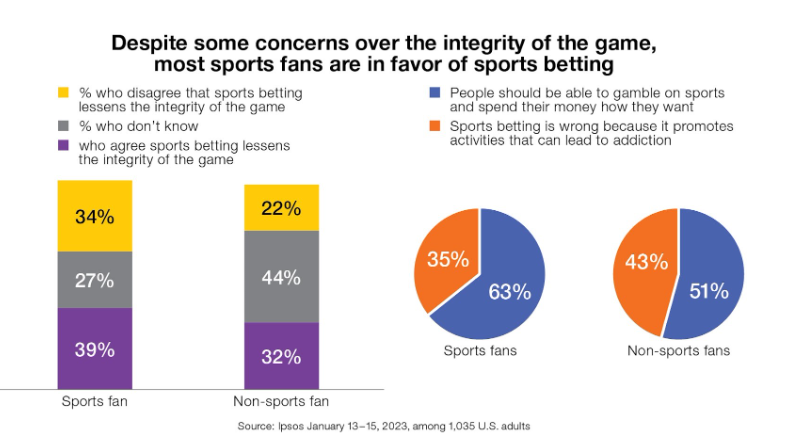
There is also a potential for the development of a more unified regulatory framework. As the industry grows, there might be a push toward standardizing regulations across states to streamline operations and address cross-state challenges.
Consumer protection will remain a key focus, with regulations likely to strengthen around responsible gambling. Measures such as betting limits, self-exclusion programs, and awareness campaigns about the risks of gambling are expected to be emphasized.
FAQs
Is Sports Betting Legal in the USA?
Sports betting legality in the USA varies by state. Following the Supreme Court's 2018 decision to overturn the federal ban on sports betting, individual states gained the authority to legalize and regulate sports betting within their borders.
As a result, several states have legalized sports betting in various forms, including online and in-person, while others are still in the process or have maintained prohibitions.
How Does Betting Work in America?
In the United States, sports betting works under a variety of models, depending on state regulations. Bettors can place wagers at physical sportsbooks, online platforms, or using mobile apps where legal. The types of bets include point spreads, moneylines, over/under, parlays, and more, covering a wide range of sports and events.
Do Americans Pay Tax on Sports Betting?
Yes, Americans are required to pay taxes on sports betting winnings. The Internal Revenue Service (IRS) considers all gambling winnings taxable income. Bettors must report their winnings on their tax returns, and in some cases, operators may withhold taxes on large winnings before payout.
Is Betting Popular in the USA?
Betting in the USA is growing in popularity, but the participation rate is not overwhelmingly high. Just 8% of Americans have placed an official bet on a live sporting event online. Even fewer have bet on an in-person live event (4%) or an esports event in either fashion (3%).
This indicates that while sports betting is gaining traction, it is still not a mainstream activity for the majority of Americans.
What Sport Do Americans Bet on the Most?
In the realm of sports betting in the USA, the NFL takes the lead. The most popular league to bet on among sports bettors is the NFL (59%). This is reflective of the NFL's widespread popularity in American culture.
Additionally, Sports bettors are most likely to want to put their money in professional sports leagues like the NFL and NBA. However, it's important to note that a strong majority of sports bettors can be described as infrequent bettors who only bet once a month or less (73%).
This suggests that while NFL and NBA betting is popular, it is often done on a casual basis
Wrapping Up
The landscape of US sports betting, as detailed in this comprehensive report, reveals a dynamic and evolving sector. With only a small percentage of Americans actively participating in sports betting, the industry still generates significant revenue, indicating its substantial economic impact.
The NFL's dominance in betting preferences and the demographic skew towards younger, affluent males highlight targeted opportunities for market growth and innovation.
As the industry navigates through regulatory changes and technological advancements, it continues to balance the excitement of sports engagement with the responsibilities of ethical and social considerations.
The future of sports betting in the US, shaped by these diverse factors, promises to be both challenging and rewarding for stakeholders and participants alike.