The latest Ipsos Pride Report 2026 reveals that, after several years of change, public opinion across 26 countries is beginning to stabilize. While support for anti-discrimination protections, marriage equality and LGBT+ visibility remains strong in many places, opinions continue to differ on transgender-related policies.
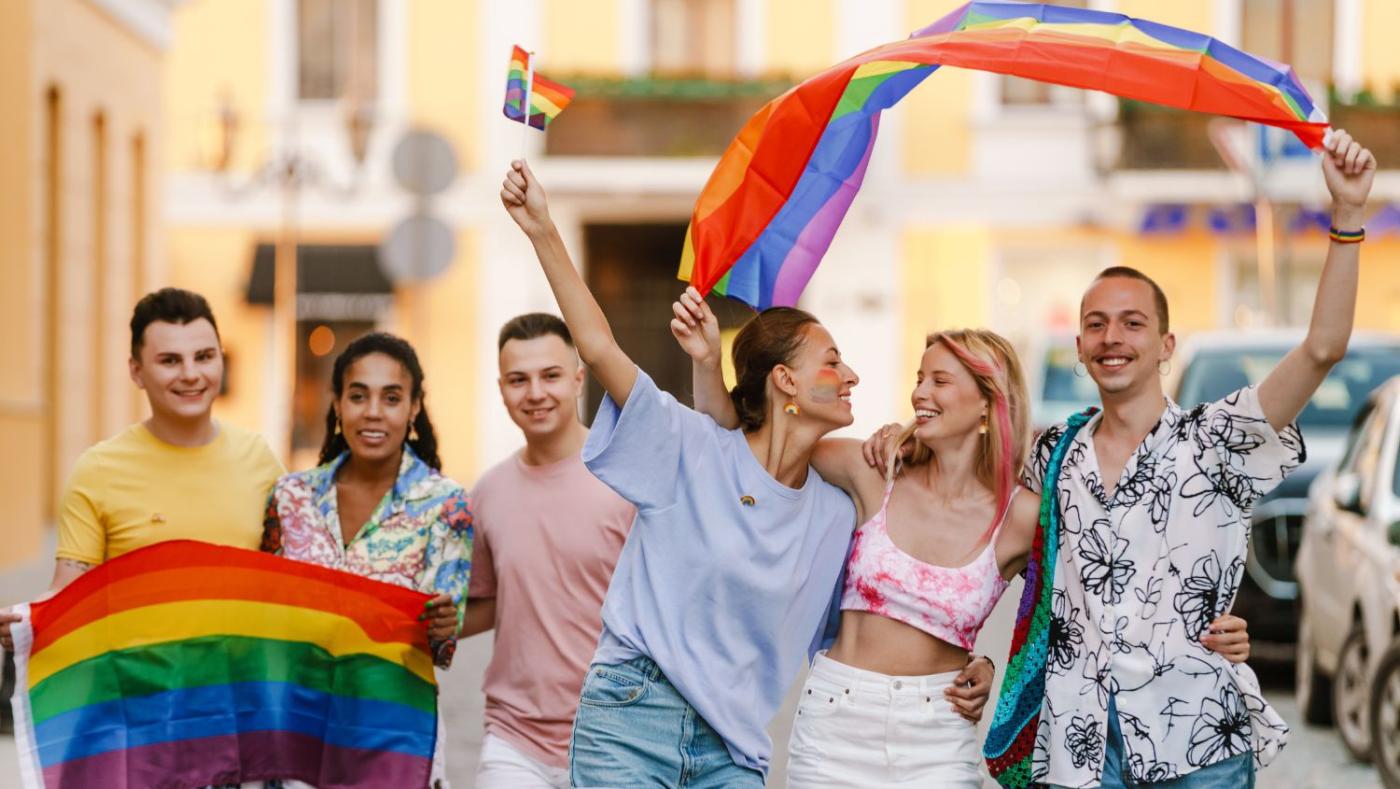
About the study: The results come from the Ipsos LGBT+ Pride Report 2026, a survey conducted between April 24 and May 8, 2026, among 19,019 people between 18 and 74 years old in 26 countries. Unless otherwise noted, the percentages mentioned here are the average of the countries that took part in the study.
In the United States, the findings broadly mirror the global picture. Support remains strongest for anti-discrimination protections and same-sex marriage, while opinions are more divided on issues related to transgender rights.
1. Most people continue to support laws protecting LGBT+ people from discrimination
Globally (average of participating countries), 52% of the people surveyed support laws banning discrimination against LGBT+ people in areas like work, education, housing, and social services.
In the United States, 53% support laws banning discrimination against LGBT+ people in employment, education, housing and social services—almost identical to the global average of 52%.
Even though this number is down from 2021 (57%), it's holding pretty steady compared to 2025 (51%). It looks like people's views are finally settling down after a few years of shifting around.
2. Support for same-sex marriage remains strong worldwide
If one topic keeps standing out, it's marriage between same-sex couples.
Globally, 53% of people think same-sex couples should be able to legally marry. Support is highest in the Netherlands (80%), Spain (74%) and Sweden (73%). At the other end of the scale, support is lowest in Türkiye (16%) and Poland (33%), highlighting significant differences in attitudes toward marriage equality across countries.
Support in the United States is slightly above the global average, with 56% saying same-sex couples should be allowed to marry legally.
This proves that marriage equality is still a massive pillar of acceptance for the LGBT+ community.
3. Nearly half of people support LGBT+ people living openly
Around the world, 49% of people surveyed support LGBT+ folks being open about their sexual orientation or gender identity with those around them.
Plus, 46% support LGBT+ people showing affection in public, like holding hands or kissing.
In the United States, 49% support LGBT+ people being open about their sexual orientation or gender identity, matching the global average. Meanwhile, 38% support public displays of affection such as holding hands or kissing.
These results show that for many people, visibility is still an important part of inclusion.
4. More people support than oppose companies promoting LGBT+ equality
Globally, 42% of people support brands and companies actively promoting equality for LGBT+ folks, while 22% oppose it.
In the United States, 42% support companies actively promoting LGBT+ equality, closely matching the global average, while 39% support employers having programs and policies that explicitly support LGBT+ employees.
That's a little higher than in 2025 (41%), but still lower than what we saw back in 2021 (49%).
Basically, there's still way more support than pushback. But what people expect from brands seems to have shifted over the last few years.
5. There is widespread recognition that trans folks face discrimination
One thing almost everyone agrees on is the reality of discrimination.
Nearly two-thirds (67%) of Americans believe transgender people experience a great deal or a fair amount of discrimination in society today, slightly above the global average of 65%.
Globally, 65% of people think transgender folks deal with a lot of discrimination in today's society.
Plus, 75% agree that lesbian, gay and bisexual people should be protected from discrimination in employment, housing and access to businesses, while 73% say the same for transgender people.
6. Transgender rights continue to generate the most divided public opinion
While there's broad agreement that we need to protect trans people from discrimination, opinions are a lot more mixed when it comes to specific public policies.
In the United States, 21% support transgender athletes competing according to the gender they identify with, compared with the global average of 22%.
Opinion is also divided on other issues. In the U.S., 43% support transgender teenagers receiving gender-affirming care with parental consent, 41% support government-issued documents including a gender option beyond "male" and "female," 41% support health insurance covering gender transition costs, and 39% support access to facilities that correspond with a person's gender identity.
For example, globally, support for trans athletes competing according to the gender they identify with sits at 22%, compared to the 32% we saw back in 2021.
Support for transgender athletes competing according to their gender identity stands at 22% globally, down from 32% in 2021. Views are similarly divided on gender-affirming healthcare for teenagers (50% agree with access with parental consent) and access to facilities based on gender identity (47% agree), highlighting the complexity of public opinion on transgender issues.
What do these results tell us?
The Pride Report 2026 shows a reality that's more complex than just a simple step forward or backward.
On one hand, support for anti-discrimination measures, acceptance of marriage equality, and LGBT+ visibility continues to be significant in a lot of countries. On the other hand, some debates, especially those related to trans issues, keep generating divided opinions.
The main takeaway is that attitudes seem to have stabilized. And while support levels vary by topic and country, inclusion and equality are still very much a part of the global public conversation.
For U.S. readers, the results suggest that public opinion is broadly aligned with global trends: support remains strongest for equal rights and protections, while transgender-related policies continue to generate more varied views.
As with most international research, these averages help us spot general trends, even though opinions can vary a lot between countries and regions.
Your turn
Do you see yourself in these results? Did any of the stats surprise you? Do you think opinions on LGBT+ rights are changing around you?
Tell us what you think and join the conversation.
Join the Ipsos iSay community
By joining Ipsos iSay (membership is completely free), you can:
- Share your opinion on topics that impact society and everyday life.
- Contribute to research that helps us understand how attitudes and trends are changing worldwide.
- Make sure perspectives like yours are represented in global studies.
Your voice matters. Sign up today for Ipsos iSay and help shape the research of tomorrow.
*Source: Ipsos Pride Report 2026. Base: 19,019 online adults aged 18–74 across 26 countries, interviewed April–May 2026.